
Turn off your non-essential lights at night to help birds safely migrate in the spring and fall!
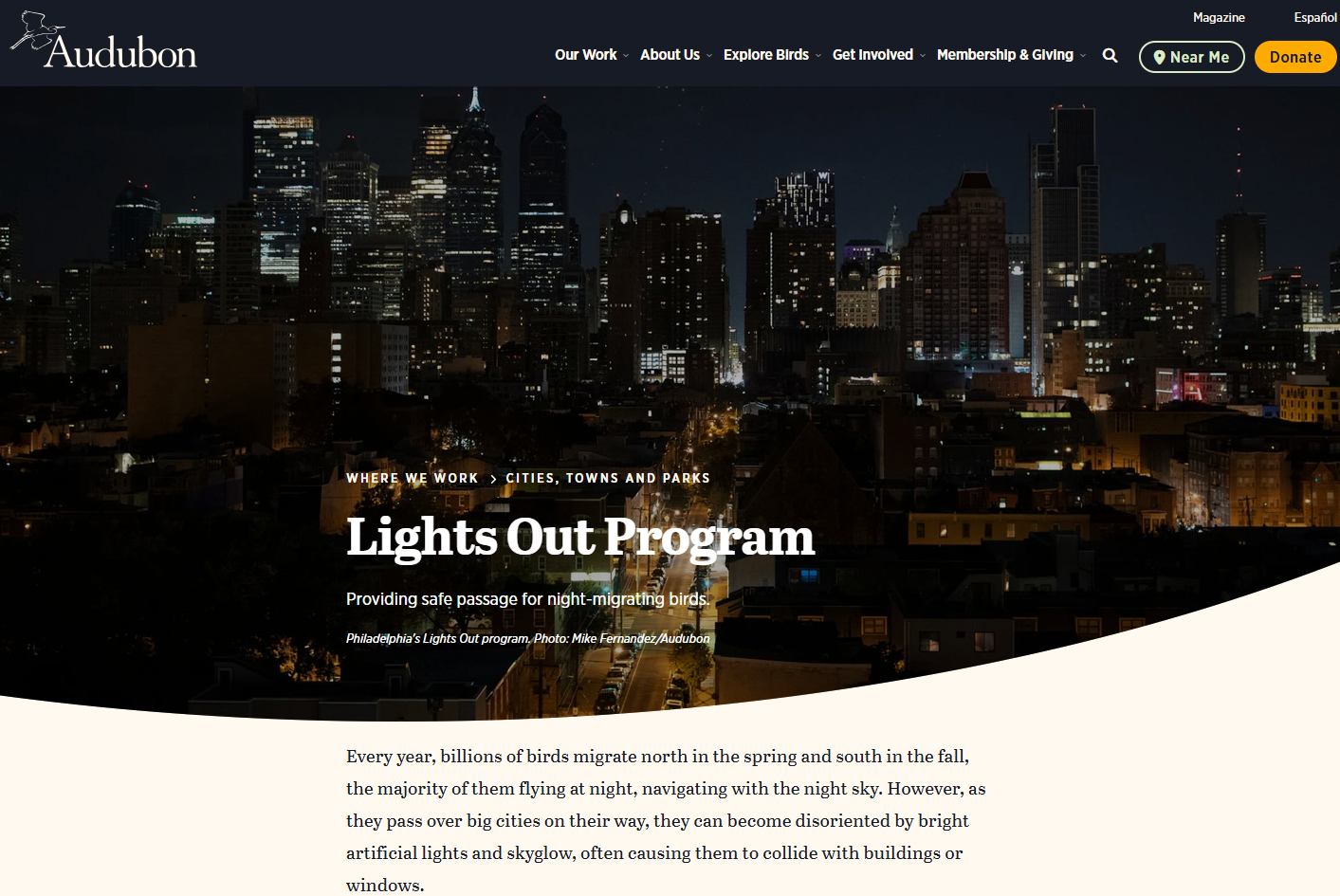
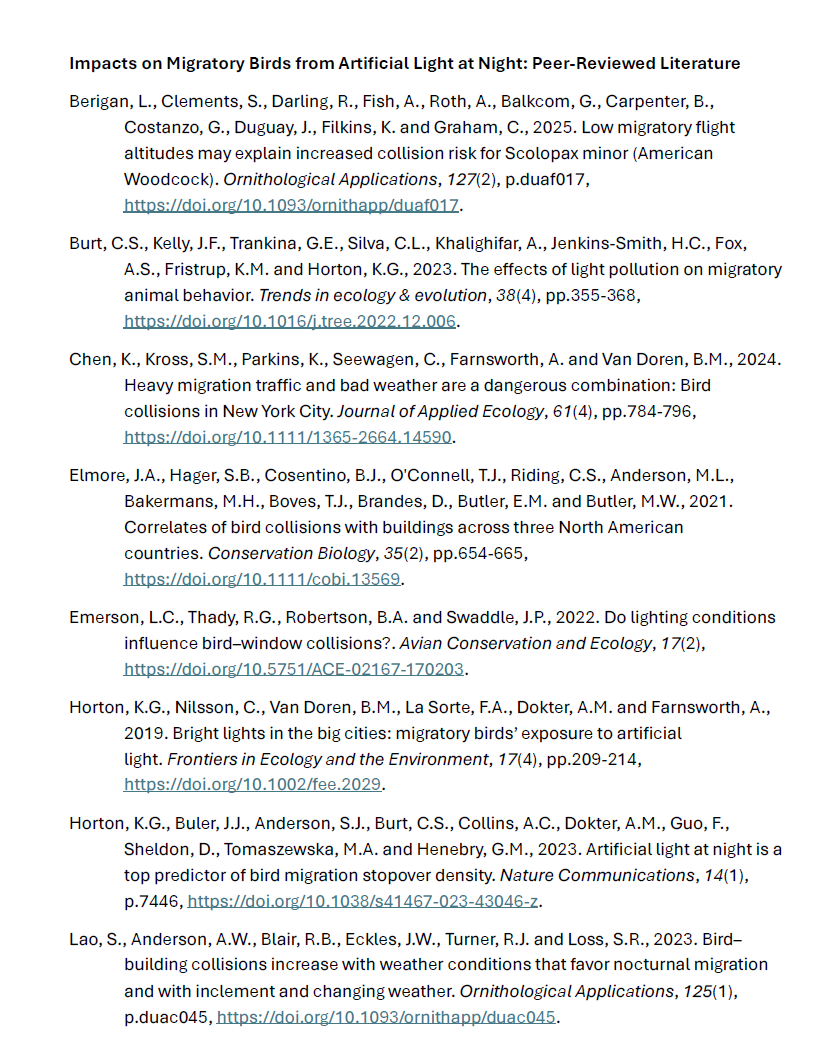
Every spring and fall, billions of birds migrate across North America, using the stars and moon to navigate. Artificial light emitted from our cities attracts them, pulling them off their migratory path. Once off course and in cities, birds are disoriented and confused by the surrounding lights, no longer able to navigate. Trapped in cities, the birds use up precious energy stores meant for migration. They also become vulnerable to colliding with windows. Mass mortality events can occur during migration, where sometimes thousands of birds die at a single building. Window collisions during migration are influenced by multiple factors including migration intensity and weather, but the solution is simple: lights out!
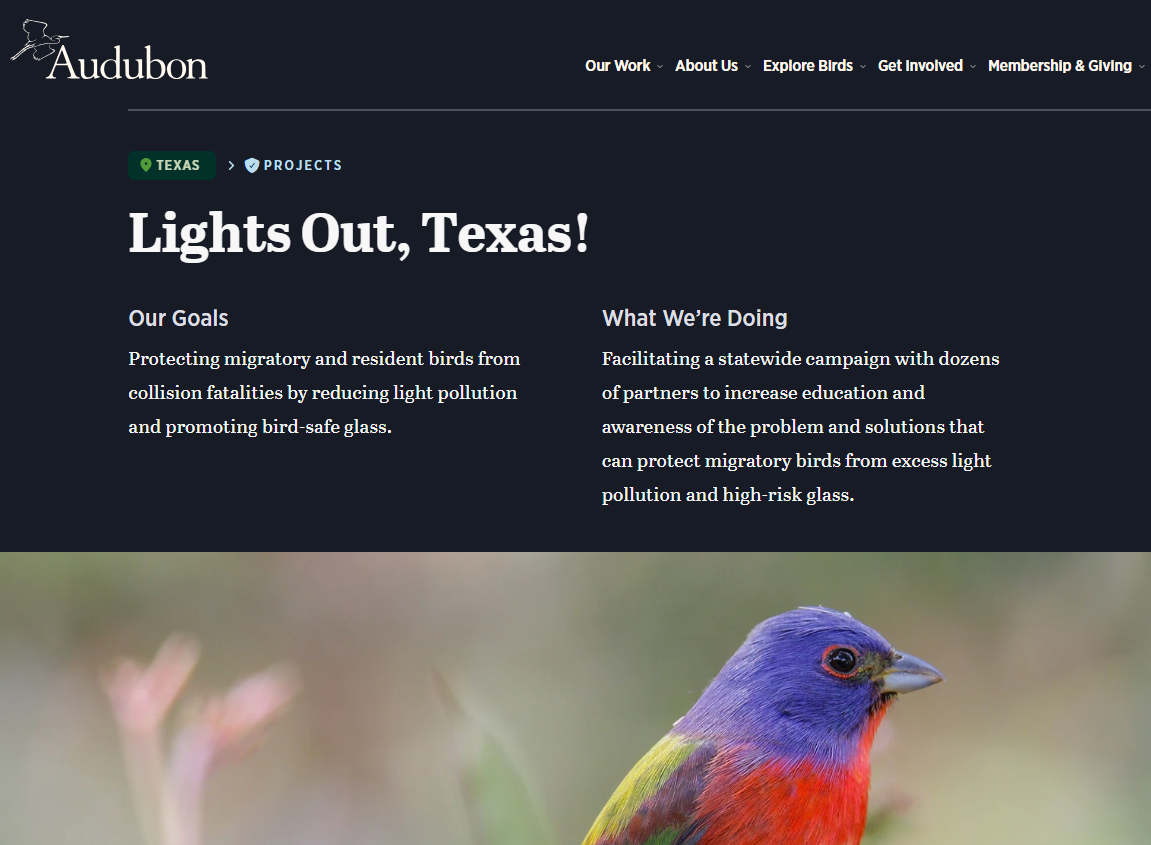
Turning our unnecessary lights out can support birds by keeping them on their migratory path, allowing them to safely travel above and through our cities. Reducing light during migration can substantially reduce window collision risk and while treating windows is still crucial, turning lights out is an easy and free way to help. So join us in supporting birds, saving energy, and enjoying a better view of our night sky by saying Lights Out, Tulsa!
What is Lights Out Tulsa?
Lights Out is a national program with more than 40 participating cities across the U.S. Tulsa is launching Lights Out and joining the efforts of Lights Out Oklahoma and Lights Out Heartland. We are asking community members to turn off non-essential lights during bird migration seasons to help save birds, save energy, and save money. Simply turn off your lights from 11 PM – 6 AM during peak spring migration, April 15 – May 31, and peak fall migration, August 15 – October 31.
How does this help birds?
Billions of birds migrate biannually at night, using the stars and moon to navigate. When large amounts of artificial light are emitted from the ground, birds are pulled off their migratory course and are attracted to these brightly lit areas. Once in cities, birds are surrounded by lights and become disoriented and exhausted, putting them at higher risk of colliding with building windows or being predated upon. By turning off lights, birds can migrate safely through Tulsa and continue along their migratory course.
Will this cost me money?
No! This is a free program, and you will save money! By turning off lights, you will be lowering your energy usage and saving money on your electric bill.
What lights should I turn off?
We encourage everyone to turn off all non-essential lighting or lights not in use. Some examples include decorative or supplemental lighting, interior building lighting, lobby/atrium lighting, non-essential exterior lighting, and lights near glass.
Will this compromise human safety?
No – we ask that only non-essential lights or lights that are not in use be turned off. We want to keep the safety of our entire community in mind – both birds and people!
When to participate?
- Peak spring migration: April 15 – May 31
- Peak fall migration: August 15 – October 31
- Full spring migration: March 1 – June 15
- Full fall migration: August 1 – November 15
Links to resources for inspiration
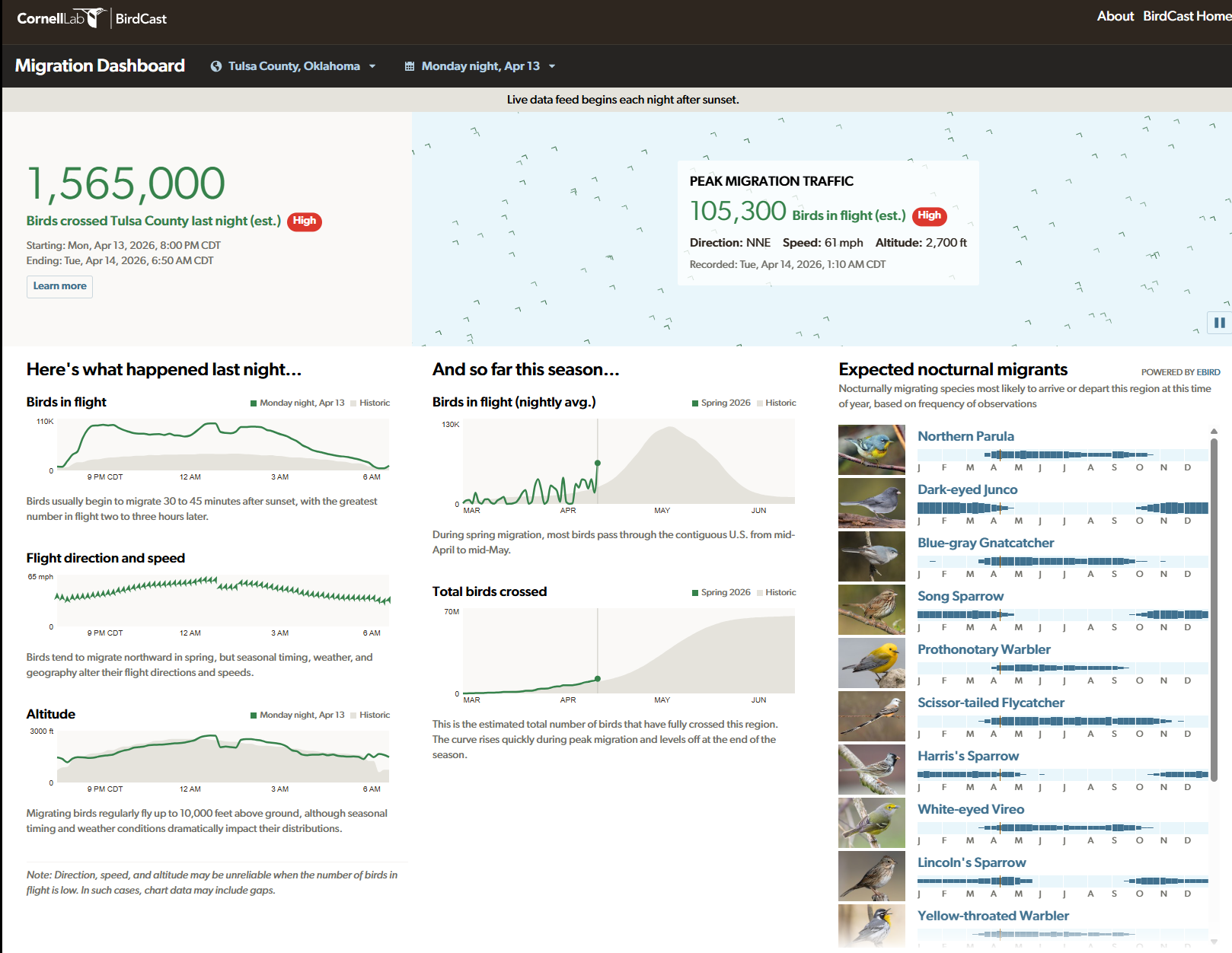
BirdCast
Get the latest migration updates
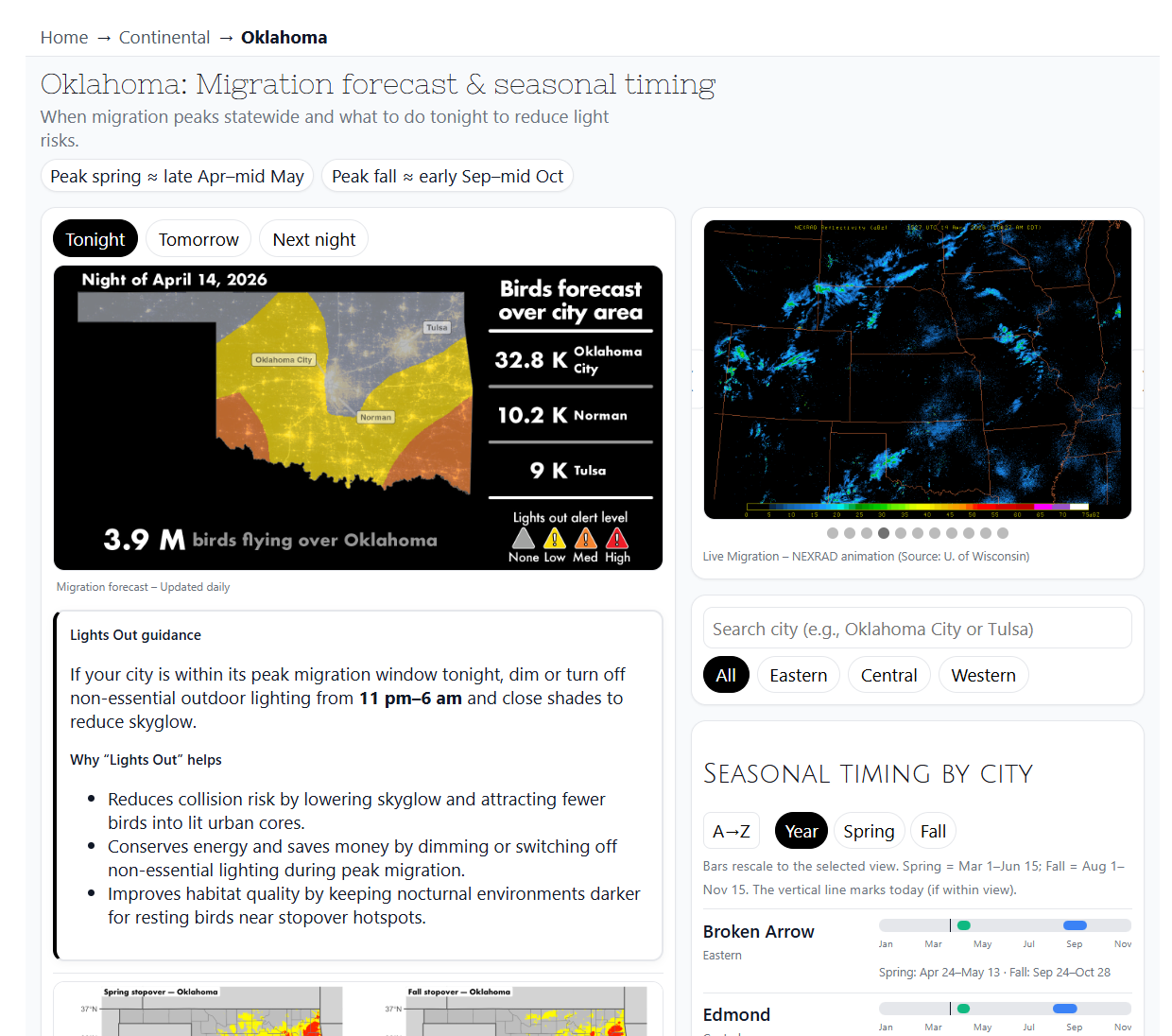
Purdue Aeroecology Lab: Oklahoma Migratory Dashboard
Learn more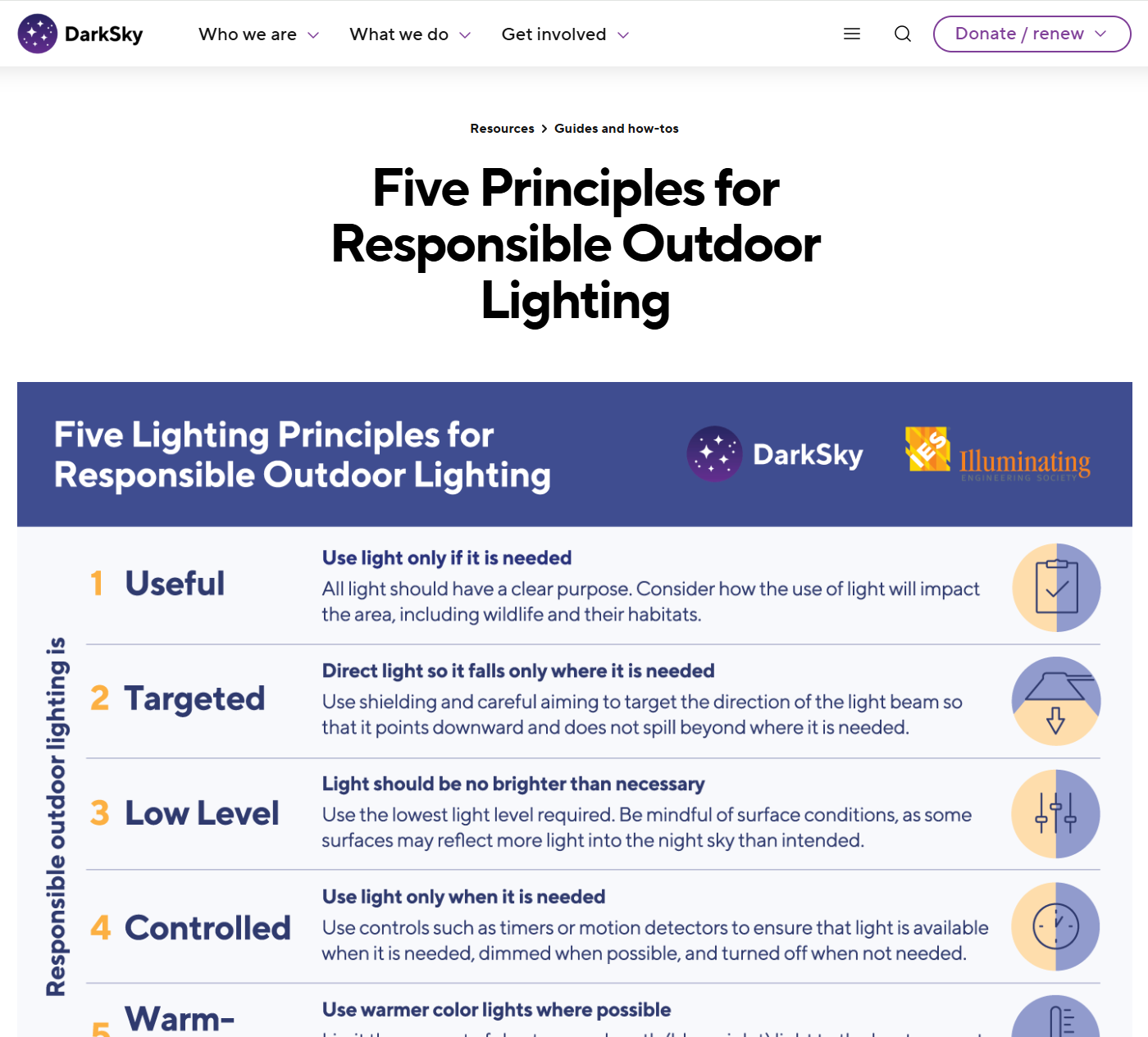
DarkSky International's Five Principles for Responsible Outdoor Lighting
Learn more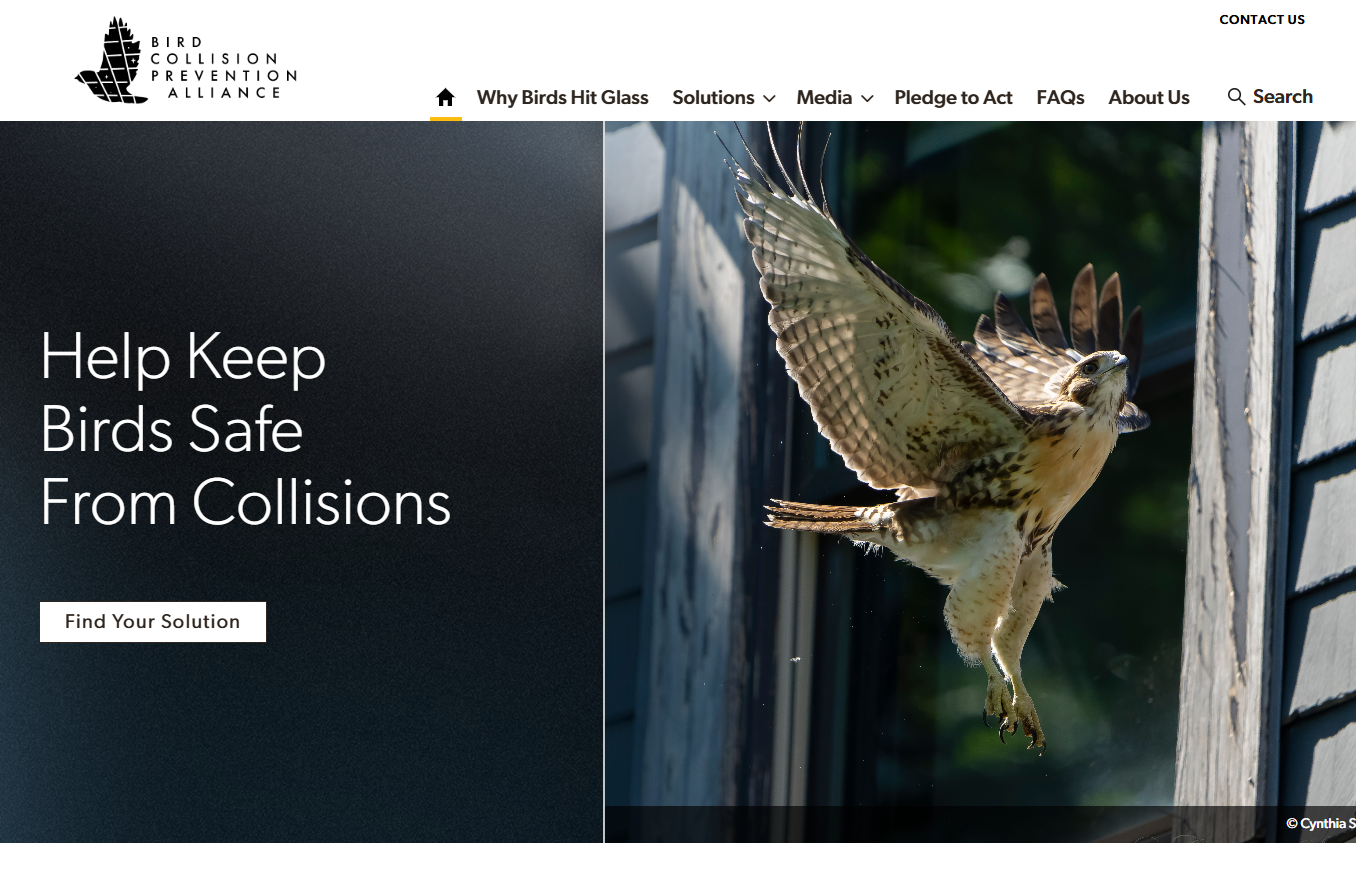
Bird Collision Prevention Alliance
Learn more